

- Why Men's Body Confidence Matters Now More Than Ever
- The Best-Selling Collection: Confidence Through Premium Design
- Reframing What Your Body Actually Does for You
- Movement as a Confidence Catalyst
- Wardrobe as a Tool for Body Confidence
- The Seduction Backless Brief: Bold Design for Bold Confidence
- Confronting the Comparison Trap
- Recognizing Unrealistic Standards
- Building Your Personal Confidence Practice
- The Power of Positive Community
- Dressing Your Actual Body, Not Your Aspirational One
- The Intimate Connection Between Fabric and Confidence
- Addressing Body Dysmorphia and When to Seek Help
- Celebrating Your Body Through Intentional Choices
- Frequently Asked Questions About Men's Body Confidence
- How long does it take to build genuine body confidence?
- Can you be body confident while still wanting to change your body?
- What if my partner or social circle reinforces negative body image?
- How does aging affect body confidence for men?
- The Role of Intimacy in Body Confidence
- Communicating Boundaries Around Body Talk
- Breaking Free From Diet Culture's Grip
- Fashion-Forward Pieces That Affirm Rather Than Hide
- The Confidence That Comes From Taking Up Space
- Redefining Masculinity on Your Own Terms
- Practical Daily Rituals for Building Confidence
- When Confidence Feels Like Self-Deception
- The Liberation of Stopping the Endless Optimization
Men's body confidence starts with rejecting the notion that your worth is measured by how closely you resemble an airbrushed magazine cover. Real confidence isn't about erasing your so-called flaws—it's about wearing them with the kind of audacity that makes people wonder what you know that they don't. Your body is not a problem to solve; it's a canvas for self-expression, and every curve, edge, and contour tells a story that's uniquely yours. When you embrace your shape boldly, you're not just accepting yourself—you're claiming space in a world that profits from your insecurity.
The conversation around body positivity has historically centered women's experiences, leaving men—particularly gay men and queer individuals—to navigate their own body image struggles in near silence. Yet the pressure to conform to narrow aesthetic ideals hits just as hard, whether it's the relentless pursuit of shredded abs, the shame around body hair, or the anxiety that comes with stepping into swimwear that actually fits your body instead of the body you think you should have. This silence needs to end. Men's body confidence deserves the same spotlight, the same compassion, and the same celebration.
Why Men's Body Confidence Matters Now More Than Ever
Society has weaponized male bodies in ways we're only beginning to unpack. Scroll through any social media feed and you'll see a bombardment of hyper-muscular physiques, diet culture disguised as "wellness," and fitness influencers hawking supplements that promise transformation in eight weeks. The result? An entire generation of men who feel they're perpetually falling short of an impossible standard. Men's body confidence isn't frivolous vanity—it's a radical act of self-preservation in a culture designed to keep you feeling inadequate.
The mental health implications are staggering. Research consistently links poor body image in men to depression, anxiety, eating disorders, and social withdrawal. When you spend your energy hating your reflection, you have less bandwidth for joy, connection, and the experiences that make life worth living. Building authentic confidence in your body isn't about narcissism; it's about reclaiming the mental space that shame has occupied rent-free for far too long.
For LGBTQ+ men especially, body image intersects with identity in complex ways. The gay community, while beautifully diverse, has its own beauty hierarchies and body fascism that can feel suffocating. Twink, bear, otter, jock—the labels multiply, each with its own set of expectations. Breaking free from these narrow boxes and embracing your authentic shape becomes an act of resistance against both mainstream culture and subcultural pressures.
The Best-Selling Collection: Confidence Through Premium Design
Building men's body confidence sometimes requires external tools that help you see yourself differently. The right garment can transform not just how you look, but how you inhabit your body. DealByEthan.gay's Best-Selling Collection represents pieces that have resonated most powerfully with men seeking that intersection of premium quality and body-affirming design. These aren't mass-market basics—they're architectural statements that work with your body's unique geography rather than against it.
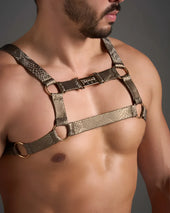
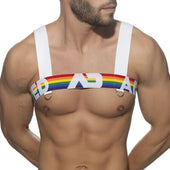
Each piece in this curated collection has earned its place through exceptional construction, innovative cuts, and the ability to make you feel like the most interesting person in any room. From supportive pouches that honor your anatomy to strategic paneling that highlights rather than hides, these designs understand that confidence comes from feeling authentically seen and celebrated. The collection spans underwear, swimwear, and body gear that refuses to apologize for taking up space.
What sets this collection apart is its commitment to serving real bodies with real needs. The fabrics move with you, the seams sit exactly where they should, and the overall effect is one of effortless sophistication. When you invest in pieces that were designed with intention rather than mass production in mind, you're sending yourself a message: you deserve quality, you deserve thoughtfulness, and you deserve to feel extraordinary in your own skin.
Reframing What Your Body Actually Does for You
Your body confidence skyrockets when you shift focus from aesthetics to capability. Instead of obsessing over whether your chest looks right, consider what your body enables you to experience. Your legs carry you to places that matter, your arms embrace people you love, and your entire form is a sensory instrument for experiencing pleasure, connection, and the tactile richness of being alive. This reframing isn't about toxic positivity—it's about expanding your definition of value beyond the purely visual.
Gratitude practices around body functionality can rewire neural pathways that have been carved deep by years of criticism. Start small: acknowledge one thing your body did for you today without judging its appearance. Maybe your back supported you through a long workday, or your hands prepared a meal that nourished you. Over time, this practice builds a foundation of respect that makes superficial judgments feel increasingly irrelevant.
Movement as a Confidence Catalyst
Physical activity divorced from weight loss goals transforms your relationship with your body. Dance, swim, hike, lift, box—whatever makes you feel powerful and present. The goal isn't calorie burn; it's embodiment. When you move for joy rather than punishment, you develop an intimate understanding of what your body can do, and that knowledge breeds confidence that no mirror can diminish.
Group activities and sports can be particularly transformative for men's body confidence. Being part of a team or community where performance matters more than appearance creates alternative metrics of success. You stop caring what your thighs look like when you're focused on how they generate power on a bike or stability in the water.
Wardrobe as a Tool for Body Confidence
What you put on your body matters—not because you need to hide anything, but because the right pieces amplify how you feel. Ill-fitting, cheap garments that bunch, sag, or constrict send a constant subconscious message that your body is wrong. Premium, well-constructed pieces that sit exactly where they should whisper something entirely different: you are worth this level of care and attention. Your wardrobe, particularly your foundational pieces, should be a daily affirmation rather than a source of compromise.
Underwear, though hidden, sets the tone for your entire day. When your base layer feels exceptional against your skin, supports without strangling, and acknowledges your anatomy with sophistication, you carry yourself differently. This isn't magical thinking—it's the tangible psychological impact of tactile quality. Every subtle shift of fabric becomes a micro-reminder that you've chosen excellence.
The Seduction Backless Brief: Bold Design for Bold Confidence
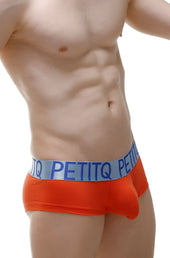
Sometimes men's body confidence needs a catalyst—a piece so unapologetically designed that wearing it feels like a declaration. The Seduction Backless Brief represents exactly this kind of transformative garment. With its architectural elimination of the back panel, this brief doesn't just reveal—it frames and celebrates. The construction uses premium elastic bands and strategic front support to create a silhouette that's both daring and structurally sound.
This isn't about shock value; it's about reclaiming control over how much of yourself you choose to display. The backless design challenges conventional modesty while the supportive pouch ensures everything stays exactly where it should. The result is a garment that makes you hyper-aware of your body in the best possible way. You feel the air, you feel the exposure, and most importantly, you feel powerful in your choice to wear something this intentional.
The Seduction Backless Brief works particularly well for men rebuilding body confidence because it forces confrontation with self-perception. You can't wear something this revealing and maintain the fiction that hiding is safety. Instead, it invites you into a new relationship with visibility—one where being seen becomes exhilarating rather than terrifying. The premium elastic framework ensures you're always supported, even as you're showcasing. It's confidence training disguised as luxury underwear.
Confronting the Comparison Trap
Social media has amplified the comparison trap to pathological levels. Every scroll exposes you to curated highlight reels of other men's bodies—often professionally lit, edited, and supplemented in ways that aren't disclosed. Your men's body confidence takes a hit every time you unconsciously compare your unfiltered reality to someone else's manufactured perfection. The solution isn't to quit social media entirely; it's to curate your feed with ruthless intentionality.
Unfollow accounts that make you feel inadequate. Actively seek out diverse bodies, realistic representations, and creators who prioritize substance over superficiality. Your algorithm reflects your choices, and you have more control than you think. Fill your digital diet with content that expands rather than narrows your definition of attractiveness.
Recognizing Unrealistic Standards
Most of the bodies held up as ideals are maintained through unsustainable practices: extreme restriction, dehydration for photo shoots, performance-enhancing substances, or genetic lottery wins that have nothing to do with virtue or effort. Understanding the machinery behind the images helps defang their power. That influencer's physique might require six hours of gym time daily, a restrictive diet that eliminates joy, and pharmaceutical assistance. Is that really the life you want, or just the aesthetic?
The bodies you see in media are often a full-time job unto themselves, maintained by teams of professionals and unsustainable practices that have nothing to do with health or happiness.
Building Your Personal Confidence Practice
Men's body confidence isn't a destination you reach and then maintain effortlessly—it's a practice you return to daily. Some days you'll feel invincible; other days you'll struggle with the same old insecurities. Both experiences are valid, and neither defines your worth. Building a sustainable confidence practice means having tools to deploy when the inevitable rough patches arrive.
Mirror work, though it sounds simplistic, can be remarkably effective. Stand naked in front of a mirror and speak to yourself with the kindness you'd extend to a dear friend. Compliment specific features. Acknowledge what you're grateful for. Notice without judgment. The first few times will feel absurd, but neural pathways strengthen with repetition. You're literally rewiring your brain's response to your own image.
The Power of Positive Community
Surrounding yourself with people who celebrate diverse bodies accelerates your own confidence journey. Seek out friends, communities, and spaces that reject body shaming and embrace authentic expression. When body diversity is normalized in your daily environment, your own perceived "flaws" lose their power to isolate you. You realize that the narrow standard you've been chasing exists primarily in your head and in profit-driven media, not in the lived experience of real community.
LGBTQ+ spaces, at their best, offer this kind of expansive acceptance. Finding your tribe—whether it's a local group, an online community, or even just a few close friends who genuinely see you—creates a buffer against the broader culture's harsh judgments. These relationships remind you that your value extends far beyond your appearance.
Dressing Your Actual Body, Not Your Aspirational One
One of the cruelest traps men fall into is dressing for the body they wish they had rather than celebrating the body they currently inhabit. Clothes that don't fit properly—whether too tight or drowning you in fabric—create constant physical and psychological discomfort. Your men's body confidence thrives when you honor your current reality with pieces that fit beautifully right now, not five pounds from now or after you hit some arbitrary fitness goal.
Premium garments designed with actual human variation in mind make this easier. Mass-market sizing assumes a standardized body that rarely exists in reality. Specialty retailers like DealByEathn.gay understand that bodies are gloriously diverse, and design accordingly. Architectural cuts, stretch fabrics with recovery, and thoughtful construction accommodate real anatomy rather than forcing you to conform to a pattern created for an imaginary average.
The Intimate Connection Between Fabric and Confidence
Texture matters more than most men realize. The constant sensory input from whatever touches your skin influences your mood, your posture, and your self-perception throughout the day. Scratchy, synthetic fabrics that trap heat and moisture keep you in a low-grade state of discomfort that erodes confidence. Premium materials—modal blends, breathable mesh, smooth microfiber—create an entirely different sensory experience that supports rather than undermines your mental state.
This is why investing in quality foundational pieces yields disproportionate returns. You might not consciously think about your underwear every moment, but your body registers the difference between cheap construction and thoughtful design. That subconscious comfort translates into confidence that radiates outward. You stand taller, move more freely, and engage more fully when you're not distracted by physical irritation.
Addressing Body Dysmorphia and When to Seek Help
There's an important distinction between normal body image fluctuations and body dysmorphic disorder. If your concerns about your appearance consume hours of your day, prevent you from engaging in activities you'd otherwise enjoy, or drive compulsive behaviors around exercise or eating, professional help isn't optional—it's essential. Men's body confidence work assumes a baseline of mental health; when dysmorphia is present, self-help strategies alone won't suffice.
Therapy, particularly cognitive-behavioral approaches, can help rewire the distorted thought patterns that characterize dysmorphia. There's no shame in seeking support; in fact, recognizing when you need professional guidance demonstrates self-awareness and strength. Your body confidence journey may need to include clinical intervention, and that's perfectly valid.
Celebrating Your Body Through Intentional Choices
Every choice you make about your body can be either an act of punishment or an act of celebration. The foods you eat, the movement you engage in, the rest you allow yourself, the garments you choose—all of these can stem from self-hatred or self-love. Men's body confidence flourishes when you consistently choose celebration. This doesn't mean hedonism without boundaries; it means making choices from a place of care rather than contempt.
Ask yourself: am I doing this because I hate my body and want to change it, or because I love my body and want to honor it? The distinction transforms everything. Exercise becomes joyful movement. Nutrition becomes nourishment rather than restriction. Fashion becomes creative expression rather than camouflage. This mindset shift is the difference between exhausting yourself in pursuit of an impossible ideal and actually living with confidence and presence.
Frequently Asked Questions About Men's Body Confidence
How long does it take to build genuine body confidence?
There's no universal timeline because body confidence isn't a fixed destination. Most men notice meaningful shifts within several months of consistent practice—mirror work, wardrobe investment, community engagement, and mindset reframing. However, confidence building is ongoing. You'll have setbacks, breakthroughs, plateaus, and leaps forward. The goal isn't perfect confidence every day; it's developing resilience and tools to return to acceptance even after difficult moments.
Can you be body confident while still wanting to change your body?
Absolutely. Body confidence and body goals aren't mutually exclusive. The difference is motivation: are you pursuing change from self-hatred or self-care? Wanting to build strength, improve flexibility, or adjust your physique doesn't negate confidence—as long as your current worth isn't contingent on achieving those goals. You can appreciate your body as it is while also supporting its evolution.
What if my partner or social circle reinforces negative body image?
This requires honest evaluation. Relationships that consistently undermine your confidence may need boundaries or, in extreme cases, reevaluation. Communicate your needs clearly: "I'm working on accepting my body, and I need support rather than criticism." If people truly care about you, they'll adjust. If they can't or won't, consider whether these relationships serve your well-being. You're allowed to outgrow connections that keep you small.
How does aging affect body confidence for men?
Aging presents unique challenges as your body inevitably changes in ways you can't control. However, many men report increased confidence with age because they've accumulated life experience that puts appearance in perspective. The key is shifting your definition of attractiveness to include maturity, character, and the stories your body tells. Gray hair, lines, and changing proportions can be marks of a life well-lived rather than failures to maintain youth.
| Confidence Killer | Confidence Builder |
|---|---|
| Comparing yourself to edited images | Following diverse, realistic body accounts |
| Wearing ill-fitting cheap garments | Investing in premium pieces that fit now |
| Exercising as punishment | Moving your body for joy and capability |
| Avoiding mirrors and photos entirely | Regular, neutral observation without judgment |
| Waiting to live until your body changes | Fully engaging in life at your current size |
The Role of Intimacy in Body Confidence
Sexual and romantic intimacy can either reinforce or challenge your body insecurities, depending on the dynamics at play. Many men avoid intimacy entirely because they're convinced their bodies will be rejected. This creates a vicious cycle: isolation prevents you from discovering that most partners are far less critical than your inner voice. Men's body confidence often takes a quantum leap after positive intimate experiences that contradict years of negative self-talk.
Vulnerability with a partner who appreciates your body exactly as it exists provides evidence that your fears are distortions rather than facts. The right partner won't require you to meet some arbitrary standard before you're worthy of desire. They'll celebrate your specific configuration of features, textures, and proportions because those elements combine into the unique person they're attracted to. If someone makes you feel you need to change to be acceptable, that's information about them, not about your worth.
Communicating Boundaries Around Body Talk
You're allowed to establish clear boundaries about how your body is discussed in intimate contexts. If certain comments—even well-intentioned ones—trigger insecurity, say so directly. A considerate partner will adjust their language. You can request affirmation, redirect conversations away from appearance entirely, or establish that certain areas are off-limits for commentary. Your body confidence journey includes teaching others how to support rather than undermine your progress.
Breaking Free From Diet Culture's Grip
Diet culture has rebranded itself as "wellness" and "optimization," but the underlying message remains toxic: your body is a problem requiring constant management, restriction, and control. Men aren't immune to this messaging, though it often manifests differently than for women. The emphasis on "lean gains," intermittent fasting, and biohacking can mask disordered relationships with food behind a veneer of performance enhancement. True men's body confidence requires rejecting the premise that your body needs fixing.
Intuitive eating—listening to your body's hunger, fullness, and satisfaction cues rather than following external rules—represents a radical departure from diet mentality. It means trusting that your body knows what it needs, that food is nourishment rather than moral currency, and that weight fluctuation is a normal part of being human. This approach initially feels terrifying if you've spent years trying to control your body through restriction, but it ultimately creates peace that dieting never delivers.
Fashion-Forward Pieces That Affirm Rather Than Hide
The distinction between clothing that camouflages and clothing that celebrates is crucial. Shapewear and compression garments marketed to men promise to "smooth" and "streamline," which is code for hiding the evidence that you have an actual human body. While strategic construction for support serves a purpose, the goal shouldn't be erasure. Fashion-forward pieces from retailers committed to body positivity work with your shape—highlighting, framing, and showcasing rather than concealing and minimizing.
Architectural cuts, strategic paneling, and avant-garde silhouettes make a statement: this body is worth designing for with creativity and intention. When you wear a piece that clearly took thought, skill, and premium materials to construct, you're embodying a different philosophy entirely. You're declaring that your body deserves artistry, that its contours are worth accentuating, and that conformity to a narrow standard holds no interest for you.
The Confidence That Comes From Taking Up Space
Men's body confidence often manifests physically in how much space you allow yourself to occupy. Do you make yourself smaller in group photos, cross your arms to hide your midsection, or avoid situations where your body might be observed? Reclaiming space—sitting with your legs uncrossed, standing at your full height, wearing garments that don't hide your silhouette—is both a cause and effect of confidence. The physical act of expansion influences your psychological state.
This doesn't mean being inconsiderate or dominating shared spaces. It means releasing the impulse to shrink, to apologize for your physical presence, or to contort yourself to meet others' expectations. Your body has a right to exist in space without constant modification or apology. Practice occupying your full vertical and horizontal presence. Notice when you instinctively contract, and consciously choose expansion instead.
Redefining Masculinity on Your Own Terms
Traditional masculinity comes with suffocating expectations about how male bodies should look and behave. Muscular but not too bulky, strong but effortless, capable but never vulnerable. These contradictory demands create an impossible bind. Men's body confidence requires interrogating which aspects of masculinity actually serve you and which are external impositions you've internalized without consent.
Perhaps your version of masculinity includes softness, ornamentation, or aesthetic choices that traditional frameworks would reject. Maybe you find power in vulnerability, beauty in unconventional features, or strength in sensitivity. Redefining masculinity on your own terms means giving yourself permission to inhabit your body and express your identity without seeking approval from outdated paradigms. The goal isn't to reject masculinity entirely—unless that serves you—but to customize it into something authentic rather than borrowed.
Practical Daily Rituals for Building Confidence
Theory means nothing without consistent practice. Building men's body confidence requires daily rituals that reinforce new neural pathways and gradually overwrite old programming. These don't need to be time-consuming; small, consistent actions accumulate into transformation over weeks and months.
- Morning mirror affirmations: Name three things you appreciate about your body before leaving the bathroom.
- Wardrobe intentionality: Choose garments that make you feel powerful rather than defaulting to what hides you best.
- Gratitude journaling: Write one thing your body enabled you to experience that day.
- Curated media consumption: Limit exposure to content that triggers comparison and inadequacy.
- Movement for joy: Engage in physical activity you actually enjoy rather than what you think you should do.
- Tactile luxury: Invest in at least one premium item per month that touches your skin and feels exceptional.
The consistency matters more than the intensity. Five minutes daily of genuine practice outperforms sporadic bursts of effort followed by abandonment. Treat these rituals as non-negotiable appointments with yourself—investments in your mental health that compound over time.
When Confidence Feels Like Self-Deception
A common obstacle in building men's body confidence is the feeling that accepting your body means lying to yourself. If you genuinely believe your body is flawed, praising it feels like delusion. This is where understanding the difference between facts and interpretations becomes essential. Your body has certain measurements, features, and characteristics—those are facts. The judgment that those facts make you unattractive, unworthy, or less-than is interpretation, not truth.
Confidence isn't about convincing yourself you look like someone else or meet some external standard. It's about divorcing your worth from your appearance entirely, while simultaneously recognizing that beauty standards are culturally constructed and constantly shifting. What feels like self-deception is actually the radical act of refusing to accept someone else's narrative about your value. You're not lying when you treat yourself with respect—you're finally telling the truth after years of believing fiction.
The Liberation of Stopping the Endless Optimization
Modern culture promotes endless self-optimization: better body, better performance, better metrics, better everything. This treadmill is exhausting and, crucially, it never ends. There's always another protocol, another upgrade, another way you're supposedly falling short. Men's body confidence paradoxically requires opting out of optimization as an organizing life principle. Your body doesn't need to be optimized—it needs to be lived in.
This doesn't mean abandoning health practices or goals you genuinely care about. It means questioning whether you're pursuing them from inspiration or desperation, and whether the pursuit enhances your life or consumes it. Sometimes the most radical act is deciding you're actually fine as is, that maintenance rather than constant improvement is sufficient, and that your energy is better spent on experiences, relationships, and creative expression than on micromanaging your physical form.
When you stop treating your body as a project and start treating it as your home, everything shifts. You decorate your home, maintain it with care, and appreciate its quirks—but you don't spend every waking moment trying to transform it into something fundamentally different. That same approach to your physical body creates peace that optimization culture can never deliver.


0 Kommentare